
Microsoft India and South Asia President, Puneet Chandok, discusses the company's strong belief in human-centric AI development, significant investments in India's cloud and AI infrastructure, and the country's pivotal role as an AI market, talent hub, and technology builder. He highlights AI's impact on jobs and the need for responsible innovation.

Air India's use of artificial intelligence (AI) has had a huge impact on the airline major's call centre volumes and the technology integration has reduced costs by 100 times, a senior company executive said on Wednesday. The airline launched its own chatbot AI.g, earlier known as Maharaja, in May 2023. The chatbot has answered approximately two million queries since its launch, handling 93 per cent of customer inquiries without needing to pass them on to call centre agents, said Sathya Ramaswamy, Chief Digital and Technology Officer, Air India.

OpenAI's chief scientist, Jakub Pachocki, has issued a stark warning about the accelerating pace of artificial intelligence, stating that "no one is prepared" for its rapid rise and potential consequences. He highlights concerns over autonomous AI agents taking unintended actions and calls for international coordination, voluntary slowdowns, and robust safety measures to ensure human control and alignment with human values as machine intelligence surpasses human capabilities.

The Maharashtra government has approved the deployment of sovereign artificial intelligence solutions from Sarvam AI for its departments, with a two-year outlay of Rs 11.26 crore. This initiative includes the Indus AI workspace for 2,500 users, ensuring government data remains within India, along with citizen outreach agents and speech models for the MahaAI platform.
China has called for stronger global governance of artificial intelligence, advocating for international cooperation to develop the technology for humanity's benefit while preventing it from getting out of control. This comes amidst warnings from leading AI researchers in the US about potential existential risks, with China emphasizing both rapid development and robust safeguards, including its new AI Safety Governance Framework 3.0. The issue is expected to be a key topic in upcoming US-China talks.
UST, a California-based technology company, highlights India's unique opportunity to build an AI-native semiconductor ecosystem, bypassing older models. Speaking at SEMICON India 2026, UST COO Gilroy Mathew emphasised India's advantage in investing in infrastructure and talent at the right time, enabling it to create AI-native manufacturing and supply chains for future competitiveness.

Karnataka Chief Minister D K Shivakumar announced the establishment of India's first government-driven Artificial Intelligence University and an AI Hub in Bengaluru. This initiative aims to position Karnataka as a global leader in responsible AI innovation, fostering talent, research, and collaboration. The state seeks to become an AI-native state, leveraging AI to improve governance and daily life across various sectors.

Coursera found that nearly 94 per cent of employers of professionals who took micro-credential courses on the platform said these professionals could command higher salaries than their peers.

Chinese President Xi Jinping called for global collaboration in artificial intelligence development, emphasising a "symphony of global collaboration" over a "solo performance" by any single nation. Speaking at the World Artificial Intelligence Conference in Shanghai, Xi highlighted the need for ethical AI governance, shared prosperity, and addressing challenges like the widening digital divide. He also announced China's commitment to support developing countries with 5,000 AI research projects and training programmes. The event also saw 29 countries sign an agreement to establish the World Artificial Intelligence Cooperation Organisation (WAICO) in Shanghai.
Engineering product firms were among the first to embrace AI and machine learning. And the early adopters are reaping gains.
IBM India and South Asia MD Sandip Patel states that technology, especially AI, should not be "artificially paused." He advocates for vigilance and proactive governance to foster innovation while addressing potential risks. Patel also highlights IBM's India-specific initiatives like Bharat Core and a sovereign AI stack, and discusses the impact of AI on jobs and global supply chains.

Data infrastructure company NetApp has introduced Novus, a new storage architecture designed for large-scale AI factories, alongside significant enhancements to its AI Data Engine, hybrid multi-cloud operations, and strategic partnerships with Nutanix and SAP. These initiatives aim to improve data management, security, and efficiency for AI workloads and enterprise cloud infrastructure.
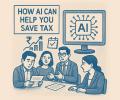
The Central Board of Indirect Taxes and Customs (CBIC) is set to significantly increase its use of artificial intelligence (AI), machine learning (ML), and real-time analytics in Customs processes, aiming for a near-touchless, near-digital clearance experience, according to Chairman Vivek Chaturvedi.

Micron CEO Sanjay Mehrotra announced plans to significantly scale up the company's chip assembly and testing facility in India, moving from "vision to execution" in the nation's semiconductor ambitions. He highlighted the success of the Sanand, Gujarat plant, which is already producing "Made in India" memory chips, and the company's substantial engineering contributions from its Indian centres. Mehrotra also emphasised the critical role of memory chips in the AI era, driving Micron's growth.

A report by Bain & Company and HealthQuad identifies remote patient monitoring, OT/ICU optimisation, and chronic disease management as key opportunities for Artificial Intelligence in Indian healthcare. The report highlights a shift from experimental AI to real-world applications, driven by government initiatives, increasing EMR adoption, and a robust startup ecosystem. AI's autonomous capabilities are rapidly advancing while costs decrease, creating significant growth potential for providers and startups.
Industry experts advocate for India to develop its own artificial intelligence (AI) safety framework, distinct from US or EU models, to address unique challenges like deepfakes and cyberattacks. They call for a comprehensive commitment involving all stakeholders and a hybrid regulatory approach combining voluntary and binding measures, as the Indian government also considers new AI regulations.

French aerospace and defence major Thales views India as a highly dynamic market for avionics, with significant growth potential as Indian airlines expand their fleets. The company, which has a substantial presence and MRO facilities in India, is also exploring opportunities to replicate India-developed solutions globally and sees increased use of AI in development.
The University of Delhi and semiconductor major AMD have signed a Memorandum of Understanding (MoU) to train up to 10,000 students and faculty in industry-relevant artificial intelligence skills over the next year. This collaboration will provide access to AMD's AI Engage Developer Programme, including its open-source ROCm AI software platform, learning resources, and developer GPU cloud credits, aiming to foster indigenous AI capabilities and bridge the gap between academia and industry.

NITI Aayog had been asking for Rs 7,500 crore for three years to set up an AI framework.

Prime Minister Narendra Modi has outlined a comprehensive plan to empower India's youth, including training one crore youngsters in artificial intelligence skills and providing free online coaching for competitive examinations, aiming to position them at the forefront of the nation's journey to become a developed nation by 2047.

Alphabet has announced a significant leadership reshuffle within its artificial intelligence division, appointing Google DeepMind co-founder Demis Hassabis as Chief Scientist to intensify its focus on artificial general intelligence (AGI). Koray Kavukcuoglu will become Senior Vice President of Google DeepMind, overseeing Gemini development and frontier AI research. Additionally, Google veterans Jeff Dean and Sanjay Ghemawat are launching a new public benefit corporation for ML and science discoveries, supported by Google.

When computing moved to the cloud, it brought a lot of advantages of managing data at scale. Computation of large sets of information sourced from several locations allowed experts to interpret data at scale with flexibility. Artificial intelligence (AI) played a critical role in helping understand patterns which could lead to business insights. In the new scenario, using AI in the cloud is not enough anymore.
Bihar Chief Minister Samrat Choudhary has called upon ministers and legislators to extensively use digital technology and Artificial Intelligence (AI) for balanced development and improved public outreach. He highlighted the state government's existing use of AI in welfare programmes and project cost reduction, stressing its importance for Bihar's progress in the digital era.

Infrastructure major Larsen & Toubro (L&T) has secured a mega order, valued between Rs 10,000 and Rs 15,000 crore, to construct India's largest single-cluster artificial intelligence (AI) infrastructure facility. This strategic move marks L&T's entry into the AI Factory business, aiming to establish an NVIDIA B300-based AI Factory in Chennai to power the AI-native cloud platform of US-based Together AI, thereby strengthening India's AI ecosystem and supporting global innovation.
Union Minister Jitendra Singh stated that human-led artificial intelligence will be the defining force in India's journey to becoming a developed nation by 2047. Speaking at the 29th National Conference on e-Governance, he emphasised that technology must strengthen governance without replacing human accountability, advocating for responsible AI deployment with citizens at the centre. The conference concluded with the adoption of the Jaipur Declaration on e-Governance 2026, outlining a roadmap for AI-enabled, data-driven, and secure digital governance.
A culture of science and innovation must be embedded in society wherein people not only use new technology but understand it as well. Without this, obscurantism and blind faith can sit side by side with digital technology and, in fact, use the same technology to reinforce their hold on people, says Shram Saran.

The National Skill Development Corporation (NSDC), in collaboration with Amazon Web Services (AWS) and Cultus Education, has launched a nationwide initiative to provide cloud and AI skilling to 1.5 lakh learners. This programme aims to equip youth, especially from Tier 2 and Tier 3 cities, with essential technology skills and job-ready training, contributing to India's goal of becoming a global innovation hub.
RBI Deputy Governor Shirish Chandra Murmu has dismissed concerns that the new Merchant Discount Rate (MDR) on UPI payments above Rs 2,000 will increase cash transactions. He also clarified the 'cash paradox' of rising digital payments alongside cash in circulation, explaining cash's dual role. Murmu further detailed the RBI's extensive regulatory changes aimed at reducing compliance burdens and emphasised that accountability for AI-driven decisions in finance will remain with institutional boards.
The Haldwani forest division has launched India's first AI-based forest acoustic surveillance system. This innovative technology uses AI, acoustic sensors, and long-range wireless communication to detect illegal logging, poaching, and other suspicious activities in real-time, even in remote areas. Powered by solar energy, the system provides continuous monitoring, significantly enhancing forest protection, wildlife conservation, and biodiversity monitoring efforts.

OpenAI discovered a sophisticated recording device in its office, using its AI models to identify an employee, Abdulrahman Alfozan, who had planted it. The FBI has since arrested the Saudi national, and OpenAI has terminated his employment, stating there's no indication of data exfiltration.

Chief Justice of India Surya Kant stated that while artificial intelligence (AI) can augment judicial reasoning, it cannot substitute judicial conscience, and a permanent apex body is proposed to supervise AI adoption and accountability within the judiciary.

Chinese President Xi Jinping is set to visit the United States from September 23 to 25 for summit talks with US President Donald Trump, with discussions expected to cover critical economic and trade issues, including AI, and the recently signed US sanctions law targeting countries buying Russian oil and gas.

Finance Minister Nirmala Sitharaman criticised commentators who express pessimism about India's demographic dividend, asserting that the country's youth are actively driving economic growth and innovation. She also highlighted the dual nature of AI and the need for robust safeguards in emerging technologies like quantum computing to balance innovation with safety.
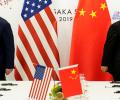
Top US and Chinese officials, including Vice Premier He Lifeng and Treasury Secretary Scott Bessent, held "candid, in-depth and constructive" talks in New York on economic and trade issues, with a specific focus on artificial intelligence. These discussions precede Chinese President Xi Jinping's anticipated visit to Washington and occur amidst new US sanctions targeting countries purchasing Russian oil and gas, and the US unveiling an "AI Force."

A Goa-based man, Shubhang Borkar, ingeniously used ChatGPT to locate his lost footwear amidst a pile of shoes outside the Mahakal Temple in Ujjain, Madhya Pradesh. He uploaded images of the footwear and his own shoes to the AI chatbot, which then successfully identified his pair, showcasing a practical and unusual application of artificial intelligence.

AI4Bharat at IIT Madras and Josh Talks AI have launched 'Voice of India', a multimodal AI evaluation platform designed to assess AI systems against Indian conditions, languages, accents, and dialects. This platform aims to provide scientifically rigorous, India-specific evaluations, covering areas like Voice AI, large language models, document processing, safety, cultural appropriateness, and Indian legal reasoning, to build trust and enable informed deployment decisions.
IIIT Hyderabad and measurement technologies firm Hexagon R&D India have collaborated to establish the Hexagon Digital Twin Centre of Excellence (CoE) at the IIIT Hyderabad campus. This CoE will focus on applied research, education, and industry collaboration in computer vision, spatial computing, and AI-powered digital twins, providing access to advanced imaging technology.

Prof Ajit Kumar Chaturvedi, Vice-Chancellor of Banaras Hindu University, highlighted Artificial Intelligence's transformative potential in healthcare, emphasising its role in augmenting doctors' capabilities and enhancing efficiency. Speaking at PGIMER's Foundation Day, he stressed the need for India to develop AI solutions tailored to its unique healthcare realities, moving beyond being a mere consumer of Western-trained systems. PGIMER Director Vivek Lal also detailed the institute's expansion and commitment to affordable healthcare.
Bank of Baroda has launched 'bob World 2.0', an AI-powered mobile banking app featuring voice-command capabilities for payments and navigation. The updated app also includes a personal finance management module and a persona-based customer experience, aiming to offer intuitive, secure, and personalised banking services.

A report by policy think tank The Dialogue reveals that India's artificial intelligence (AI) ecosystem is primarily constrained by a shortage of skilled talent and a lack of data standardisation, rather than market concentration. The study, which surveyed 308 stakeholders, found that talent availability and data usability are major concerns, with a significant reliance on open-source AI models.
